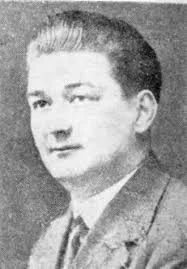
Divko Budak was born in Karlobag on 24 February 1897. After completing primary school in his hometown, he attended secondary school in Sušak and later the Commercial School in Ljubljana. The First World War, the influence of the ideas of the October Revolution and the revolutionary climate immediately after the war led him to join the revolutionary workers’ movement in 1919. He became particularly active in politics ahead of the first parliamentary elections for the Constituent Assembly in 1920. In 1921, he became a member of the Communist Party of Yugoslavia.
From 1927 to 1932, he lived in Perušić, where he opened a small shop known locally as the “Party shop”. During this period, he directed clandestine Party activity in the town and helped establish and develop Party organisations throughout Lika, particularly in Gospić and the Croatian Littoral. After coming to the attention of the police, he moved to Zagreb, where he continued his revolutionary work, especially within the trade-union movement, the Association of Private Employees and the Association of Bank Clerks. In 1934, he was admitted to the Zagreb Local Committee of the Communist Party of Yugoslavia. The following year, he went underground. Facing the possibility of arrest, he left the country in 1936 on a Party assignment. He spent time in Prague and Paris, where he helped organise support for the Spanish people in their struggle against fascism.
Immediately after returning to the country in 1939, Budak was arrested and, after three months of torture, released from investigative detention. Despite the danger of being arrested again, he resumed his Party activities in Zagreb. On 31 March 1941, together with a large group of communists and revolutionaries, he was arrested by the police under Maček and Šubašić and imprisoned in the Kerestinec camp. He was one of the organisers of the breakout from the camp, carried out on the night of 13–14 July. The Ustaše soon captured him and executed him by firing squad at Kerestinec on 17 July 1941.
By decree of Josip Broz Tito, President of the Federal People’s Republic of Yugoslavia, he was proclaimed a People’s Hero on 24 July 1953.